

Like River
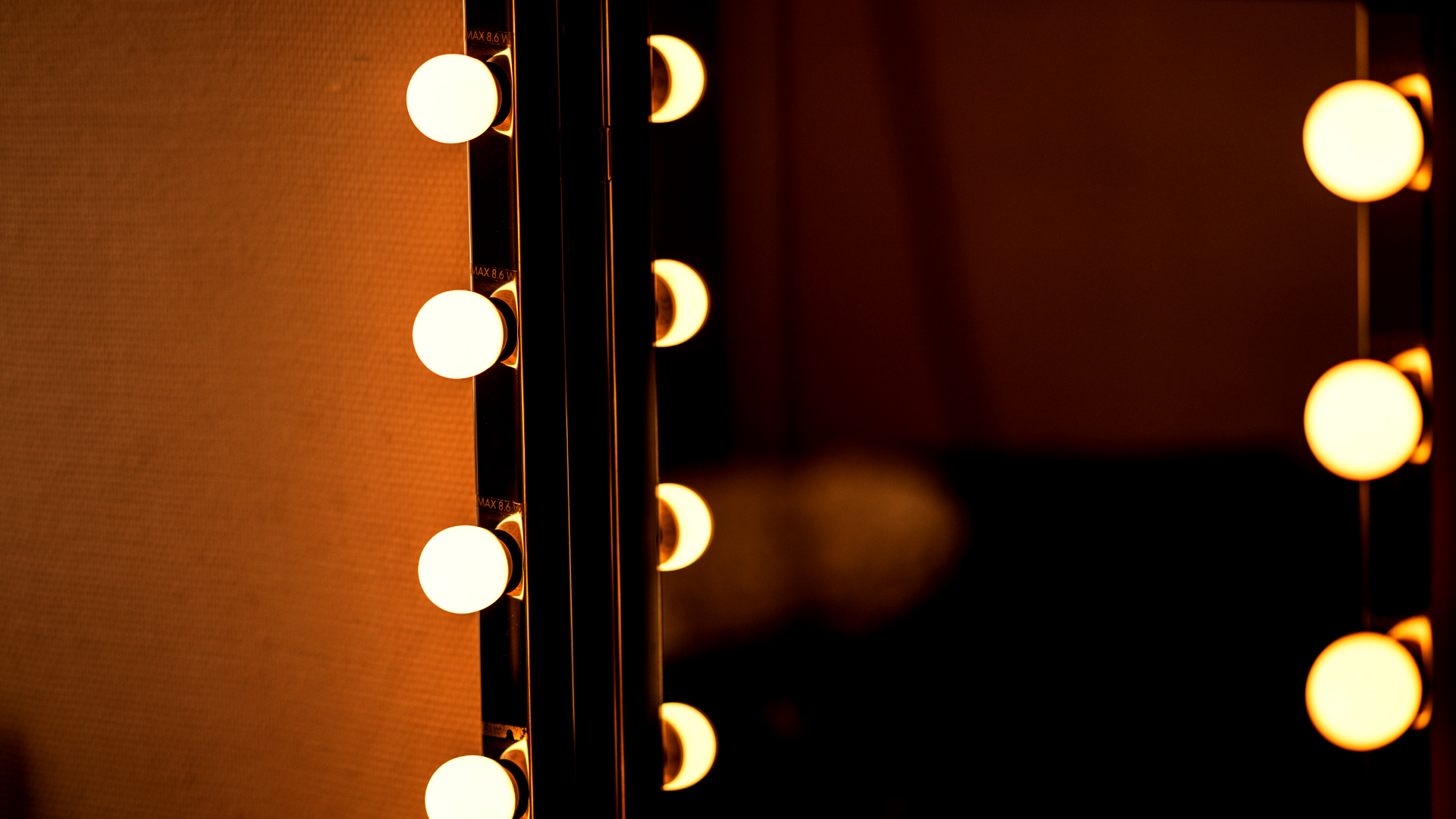
Photo from stock. Edited.
“Like River,” by Mikhaela Woodward, is the winner of the 2026 River Styx Contest for fiction.
From our fiction judge, Bennett Sims:
River Styx sent me ten brilliant stories, and it was difficult to select just one. What initially arrested me about ‘Like River’ was the wry intelligence and revisionary restlessness of its prose, the way that the narrator keeps doubling back on each sentence to refine its meaning (eight times on the first page alone: ‘That is to say,’ ‘That is to say,’ ‘What I mean,’ ‘What I mean,’ ‘That is to say,’ ‘I don’t mean,’ ‘I don’t mean,’ ‘I mean’). What I was moved to discover, as I continued reading, is that the story is in a deep sense about revision: about the ways that its characters find to revise their own bodies, identities, and desires, and about the power of roleplay, performance, and fantasy—that ‘quick-change: a magic’—to help us see new skins to crawl into. Like the best works of weird fiction, it is bizarre, beautiful, and consistently unpredictable.
The story concerns a love affair between the unnamed narrator and an other-named actor, who is portraying Arachne in a traveling musical. ‘He was known as Rat King,’ the story begins, ‘but his other name was Queen Spider.’ The narrator clarifies that what they love most about their lover is that otherness (‘I mean the part of him that was her’), the metamorphosis that this implies and the metamorphosis that—as Rat King’s stylist—the narrator helps to conjure each night. In a sense, the story is announcing its logic of transformation in these opening passages. Even so, one of the lovely surprises, on first read, is just how literally these characters will end up transforming. During an erotic game, the narrator makes Rat King crawl on a motel room floor until he becomes Queen Spider, and a first-time reader will share their awe at seeing the ‘six extra arms pushing out through his ribs,’ the ‘thirty extra fingers holding him up.’ The story itself seems to transform here, becoming a little ‘extra’ too, as it leaves strict realism behind and enters something closer to a mythic mirrorworld.
Rat King’s physical metamorphosis is accompanied—like Gregor Samsa’s—by a pronominal metamorphosis: soon after this point, ‘his mouth’ becomes ‘her mouth,’ ‘he said’ becomes ‘she said.’ But the most quietly astonishing transformation is less in the dialogue tags than in the dialogue itself. As Rat King, the lover had spoken in bro-y, comic monosyllables like ‘Word’ and ‘Bet’; as Queen Spider, she says things like this: ‘You were finally there. And you expect me to stay blind, while you watch me fumble around in the dark for you.’ A new voice is speaking from inside this new body, and it is telling the narrator—like an arachnid torso of Apollo—You must change.
For the transformation that the story is truly concerned with is the narrator’s, and it is a transformation that the narrator has been resisting: ‘I felt changeable only in the way of destruction; I was afraid all change would destroy me; I was afraid my change could destroy someone else.’ This fear of change is partly rooted, we learn, in a traumatic, Ballardian car crash; in the narrator’s scar tissue; in hatred of the body; and in the constrictions of gender. When their love affair begins, the narrator tells Rat King: ‘I have one rule. The rule is. Do not touch my tits.’ This rule installs a horizon for the story: before it ends, we know, Rat King will either have to break the rule or obey it. With the cunning of a mythic hero, Rat King breaks it by obeying it, by finding a loophole. At a turning point in the story and in their relationship, Rat King suggests, ‘What if I touch them with my extras.’ The narrator responds gamely: ‘You know what? Actually? Do it.’
So it is not Rat King who touches the narrator, but Queen Spider, and she touches not with her ‘original’ limbs but with her new ones, pressing all thirty fantasmatic fingers against the narrator’s chest. This fairytale touch is what unlocks the narrator’s own transformation. Because beneath Queen Spider’s fingers, the narrator can momentarily see a revised body, a body where ‘my tits’ are ‘Gone. Deleted.’ This is a powerful and polysemous scene (at once a sex scene, a birth scene, a metamorphosis scene, a potential egg-cracking, an echo of the narrator’s physical therapy), but the epiphany does not last long. The narrator rejects the meaning of this transformation—‘I moved it to the center of my skull and crushed it with something cold’: ‘crushed’ is one of the narrator’s key words, a car-crash word—before retreating to the safety of old meanings: ‘Meaning I pushed her off. Meaning I scrambled sideways, fell out of the bed. Meaning I said something limp and a lie, like, I need to use the bathroom.’ In that triple repetition, ‘meaning’ starts to lose its meaning, starts to sound like a verb form of ‘being mean.’
Still, Queen Spider has shown the narrator—and the reader—a different path forward, the possibilities of a different body. And the narrator experiences this new body, crucially, as a reflection: ‘She looked at my chest and then hers and then mine again: mirrors.’ The story has already established the primacy of the mirror as a metamorphic space, a frame for fantasy and for being otherwise. ‘I saw the way he looked at himself in the mirror,’ the narrator says of Rat King in the opening, ‘when I put the Queen Spider lipstick on his lips…like he was passing someone beautiful on the sidewalk.’ It's for this reason that the story is structured around mirrors, which appear at three narratively pivotal moments: at the beginning, with Rat King’s Queen Spider makeup; in the middle, with Queen Spider’s transformative touch; and at the end, when the narrator hides in the bathroom. There, the narrator realizes that ‘my body in the mirror without her touching me was the same as it had always been.’ If the narrator is going to transform, we sense, they will have to do it outside the mirror, on their own terms.
That is, perhaps, one way to read the final lines. After Queen Spider (the actor) leaves the motel room, the narrator slips into Queen Spider (the finale dress). But at the sight of their reflection, they think ‘Something is wrong’: a dress, they seem to realize, may not be the right costume for their transformation. The narrator does not sprout extra arms. Instead, they recall the feeling of Queen Spider’s pulse in ‘her eight arms,’ ‘when she pressed them to my chest, showing me something I had not wanted to see.’ This ending—ambiguous, hopeful—leaves open the possibility that the narrator might see that something again. After all, we remember, the narrator has their own talent for re-visioning things, for changing meanings and for making change. And so the ending returns us to the beginning, where we watch the narrator sprout eight new lines like eight new limbs: That is to say, That is to say, What I mean, What I mean, That is to say, I don’t mean, I don’t mean, I mean.
Like River
He was known as Rat King, but his other name was Queen Spider.
That is to say, Rat King was an actor.
That is to say, Rat King was very good at pretending to be someone he was not.
I know this because I worked with him.
What I mean by worked with him is that I was his therapist.
What I mean by therapist is that I slept with him.
I traveled the country for three months as his stylist, hooking a hip around him in bed, saying things like, There there, King Queen Rat Spider, you were incredible, don’t worry, you’ll see. Now lie down. Shut up. Take off your clothes please.
That is to say, Rat King knew virtually nothing about me.
About me there is nothing much to confess except one thing: I was much less interested in Rat King than I was Queen Spider.
I don’t mean Queen Spider as in Arachne: his lead role in the traveling musical production of the Greek myth for which I styled him. And I don’t mean the part of him that performed her.
I mean the part of him that was her.
The part of him I saw when I got him ready backstage. When I separated the tendrils of his hair into smaller beings with a comb. When I resisted the urge to put my mouth all over him. When I knew by the angle of his shoulders he wanted to put his mouth all over me. When I saw the way he looked at himself in the mirror when I put the Queen Spider lipstick on his lips, and the Queen Spider necklace on his neck, like he was passing someone beautiful on the sidewalk and did not want to make them uncomfortable with his stare.
When we first started sleeping together, I said, Listen.
I have one rule.
The rule is.
Do not touch my tits.
He said, Word.
I said, Please do not say that in this capacity ever again.
He said, Bet.
This was how I found myself following him all over the country. Crying in the audience. Watching Rat King as Queen Spider hang himself onstage. Watching the rope turn into a cobweb, the curtain enclose him mid-air. Imagining the quick-change: a magic. Then shutting my eyes and praying as the cobweb lowered his body until he could touch the ground again, crawling.
A few years back, I was in a car accident.
In the car accident, my femur snapped. The bones crunched up and out of my skin. The blow from the airbag fractured three ribs. I was pinned in the wreckage, staring at the red mass of my leg for a period of time I could not guess. I was airlifted. Had a zillion-dollar surgery. Took three months and then some to relearn to walk.
After a year, when I still walked with a limp, a physical therapist suggested crawl therapy.
I said, Like a baby?
Yes, she said. Like someone with a new body.
Because sometimes the best way to recover from something is to do it from the ground up again.
Crawling.
In the hotel room after shows, I made Rat King crawl for me.
He’d take his clothes off and keep the lipstick on.
I’d say, Get on the ground.
He’d get on the ground.
I’d say, Crawl.
He’d say, This again. Why.
I’d say, Do it or I’m leaving.
And he’d do it, of course he’d do it, but it was never right the first time, so I’d say, Start over. Do it again. Put your clothes back on. Take them off. Get on the ground. Do it again.
The second time, I’d see what I was looking for, which was the thing underneath the first thing, which was something fluid.
Like river.
Like how I wanted to be.
Shoulder blades gliding up and down his back, diagonals of movement connecting hips to shoulders, and from his sides: six extra arms pushing out through his ribs, elongating toward the floor, pressing. Thirty extra fingers holding him up.
Every time, he acted just as surprised as the first: that night when I got fed up with the forced, predictable way he would come, got too rough and pushed him out of the bed, and the blunt pain of the landing knocked something real into him—the smallest sound, like ah, like a sound I’d never heard him make. I’d peered over the bed and there he was with his extra arms, mesmerized by his own body, beginning to crawl with the new appendages, studying them in awe like he had crash landed in front of himself for the first time. I’d make him crawl until he stopped asking when he could stop. Until I was sure he had forgotten I was even in the room with him. Until I was sure he had crawled his way back into her skin—sometimes minutes, sometimes hours, sometimes I thought I’d wait days if I had to, years—and then I would say, Stop.
I’d look at the flush in his cheeks, the new shine in his eyes.
I’d ask him if he wanted me to touch the arms.
He’d say, Please.
I’d say, Not yet.
I’d wanted it to sound like: Not yet because I’m in charge.
But it didn’t sound like that.
It sounded like someone standing on the tip of a diving board for too long, getting all sad and cold and stupid with fear. Sometimes, when he looked at me in bed, the pale sheets falling across his ribcage, his extras fingering the hem, I wanted to hit him, or for him to hit me. I thought getting hit was easier than being touched. I confused my obsessions with pleasure. I thought I liked it when Rat King hung himself onstage, but I didn’t, it’s just that it did something to me: the look of his body suspended by white ropes, the spotlight cutting his eyes, drumbeats sounding in a panting silence.
I guess that’s because when I saw it, I thought of myself in my car.
Driving too fast in the ice.
Drunk and running from myself.
The squeal across the double yellow, the narrowly avoided headlights racing toward me.
Suspended in the moment before the big noise.
How that moment compares to this moment.
How Rat King turns into a spider, then into Rat King again backstage, then Queen Spider on the hotel room floor, and how, after the accident, I didn’t turn into anything but a more crushed version of myself.
One night, Rat King was looking at my chest, really looking.
He said, What if I touch them with my extras.
I said, I don’t know.
He said, That’s okay.
I thought it was sort of appealing how unbothered he was by my indecision. So I said, You know what? Actually? Do it.
I laid down. He straddled me. Which he did not need to do in order to play with my tits.
I said, What the hell are you doing.
He said, I just want to try something.
The freeway screamed outside. Moonlight sailed in through the window. I thought I heard a beeping somewhere, and spent a few seconds trying to locate it before deciding it was in my head. So there was a beeping in my head, but not a consistent beep. More like a cardiac monitor beep of a seizing bird. My mouth went dry. I got sort of dizzy. I don’t know what I thought he was doing, but I said, Hey. I think I need the window open.
He said, Right now?
No, I said. Next year.
He held my hipbones. Tilted his head and blinked. I felt him growing hard against the inside of my thigh, even as he said, I can stop. Which only made me want him more.
Just the window, I said. Just open the fucking window please.
The window was too far to reach without getting out of bed, so he started to move. His skin left my skin, sticking with small sweat. I wanted air, more air; I felt choked by my own body; the metal rods and pins in my femur hummed a sad sizzle; I felt changeable only in the way of destruction; I was afraid all change would destroy me; I was afraid my change could destroy someone else; I wanted to be crushed behind that steering wheel; I wanted to feel myself flattened: dead or otherwise; but Rat King was not a car; Rat King was Queen Spider; I was not a woman; I was Rat King; Queen Spider’s skin departed me; I didn’t like the feeling of her departing; I grabbed her around the ass; I sat her back down; her mouth fell open; she said, Fuck; she said, Listen.
Listen what, I said. Listen what.
That humming, she said. It’s loud now.
I said, What do you mean now?
She said, Hush. Please. Just hush.
Queen Spider lowered her head. She pressed her cheek to my thigh, over the topmost part of my scar, almost suctioning her ear to my skin. One of her hands brushed the hard jutting of my pubic bone over my underwear and I twitched.
Can’t you feel that? she said.
I could feel her face flushing hot against my leg. My blood coursing up and around it. Goosebumps. Dampness. Saliva.
It’s singing, she said. Like one of those little windchimes, you know? I can hear the metal. It’s almost talking. Don’t you ever hear it? And the scar, it’s almost—she traced the edges of it, long draw down, curve, long draw up—it’s almost like—she straightened, opened her mouth, and held it there. Looked at me with the mouth of a child, calling up from the bottom of a sunless canyon. The one I knew was inside of me, beneath the scar, sealed off at the top with stitches, so every call that came from the bottom hit the ceiling and bounced back down, ricocheting back endlessly into the mouth of the caller. Every single syllable: incoherent.
I understood it, she said.
There is nothing to be understood, I said. So don’t go looking.
She held both of my hands with her original pair. I didn’t want her sadness or pity; it suffocated every ounce of my desire with dread. But the tilt of her chin held only surprise. Soft and dewy. Like knowing more than she should. She pressed my thumbs together. Kissed my thumbnails. Closed her eyes.
I’m not looking, she said. I’ll keep my eyes closed.
I struggled to breathe for different reasons than before. My stomach flipped fish-like. Her eyelashes were long and dark against the circles below. I could see her eyes moving beneath the thin lids, but they did not come open. My exhale stuttered on its way out, and I focused on her chest rising and falling. Calm. Like nothing was the matter at all. I copied the pattern. I matched mine to hers. I released hold of her originals, took two of her extras, brought them to my chest, pressed her palms flat to my nipples, then let go. Our breath still in sync, but faster now. Rising. One pair at a time, trembling like she was trying hard not to hurry, she stacked her hands over the tops of the last, until all six extras were pressing down on me, all thirty fingers nesting together at my collarbones. Her eyes were still closed. My lungs stretched up against the pressure. Up and up and up but she stayed pushing, holding, gentle.
And then, something burst.
The air cleared above my sternum.
Her face above me sunk closer.
But I wasn’t moving.
Neither was she.
It took a second before I realized it was my tits below her extra hands:
Gone.
Deleted.
Like they were never there to begin with.
And though a part of me had died, there was no pain. Just air. So much of it. So much like breaking the surface of a lake after swimming for a very long time. My hand finding the old wood of a dock. Her face above me in the sun, beaming. But what scared me most was not the fact of her hand reaching out to me. What scared me most was I did not think of the bridge or the car or the stage where she hung. I did not think of how much I detested myself; I thought only of my body. Her hands. How close we were. How far away I suddenly wanted to be.
She opened her eyes.
She looked at my chest and then hers and then mine again: mirrors.
She said, Whoa.
She said, Yeah.
She said, That.
And she was smiling, and a tiny soft part of me wanted to be happy with her. But I wasn’t used to that part of me talking, so I moved it to the center of my skull and crushed it with something cold.
Meaning I pushed her off.
Meaning I scrambled sideways, fell out of the bed.
Meaning I said something limp and a lie, like, I need to use the bathroom.
In the bathroom, I turned on the faucet so she wouldn’t hear the way I was breathing when I realized my body in the mirror without her touching me was the same as it had always been.
I found myself on the floor. Undressed, too exposed. I crawled toward my sweatshirt in its heap on the tile and my right leg dragged slightly behind me, the metal inside groaning. I thought of the carpet of the physical therapy office. I thought of trying to connect my shoulder and hips and wrists and knees. I thought of the therapist watching me with her arms crossed, saying, Hm. I thought of all the things that needed fixing I couldn’t bring myself to fix: how I wanted to exist, how little I was willing to do to reach it. I heard Queen Spider knock on the door, and I shouted at her through the crack, You said you’d keep your eyes closed.
For a few minutes, she was quiet. Then, when I still did not come out, I heard her getting dressed. Air went out hard through her throat.
You were finally there, she said. And you expect me to stay blind, while you watch me fumble around in the dark for you.
She waited for a response. The time she gave was generous. I opened my mouth once, then closed it. I could think of many things to say, phrases I had heard during conflict or apology, phrases I had often stolen and reused simply to appease people, but she didn’t deserve that. The gears in my head turned slowly. I did not want her to see me unclothed, on the floor of the bathroom, unable to speak. I did not want her to see me.
The hotel door clicked open and shut.
I stood up, put my whole head under the sink, and ran it until the back of my head was frozen numb, pulling at my hair, lifting the wet strands off my scalp, arching the skin. When I straightened up, I pressed my fingers over everything I hated, over the mouths of scar everywhere and wished something different had created them. I glared at myself in the mirror and thought, Hey. Snap out of it. You could have died. You should be dead.
Queen Spider’s finale dress still hung on the door’s back. I grabbed it with wet fists, mashing the tulle, darkening the blue. I took it down. Stepped through. Slid it up over my hips. Punched my arms through the holes. Left the zipper undone, and looked.
I heard my mother saying, You look beautiful.
I heard Queen Spider saying, Something is wrong.
I replayed the finale over and over in my mind, pausing it when Queen Spider hit the ground with her eight arms: the arms she told everyone was simply a complicated part of the costume, an integral part of the performance, and I thought of how I could feel her pulse in them when she pressed them to my chest, showing me something I had not wanted to see.
Mikhaela Woodward (she/they) is a lesbian writer from the Seattle area whose work has appeared in Black Moon Magazine, Fractured Lit, and Kissing Dynamite. She is currently a Lighthouse Writers Workshop Fellow and lives in Denver, Colorado, with her wife and two cats, Luna and Cricket.